
Unlocking the Potential of Electronics Automation Benefits
- Gulshan Sharma
- Apr 19
- 4 min read

In today’s fast-paced tech world, electronics automation is no longer a luxury - it’s a necessity. The ability to streamline processes, reduce errors, and accelerate product development is transforming how electronics companies and semiconductor firms operate. I’ve seen firsthand how embracing automation can unlock new levels of efficiency and innovation. Let’s dive into the core benefits of electronics automation and explore practical ways to harness its full potential.
Why Electronics Automation Benefits Matter More Than Ever
Automation in electronics is about more than just replacing manual tasks. It’s about enhancing precision, boosting productivity, and enabling smarter decision-making. For product developers and engineers, this means faster prototyping, fewer defects, and the ability to focus on creative problem-solving rather than repetitive chores.
Here’s why electronics automation benefits are critical:
Speed: Automated systems can perform complex tasks in a fraction of the time it takes humans.
Accuracy: Machines reduce human error, ensuring consistent quality.
Scalability: Automation allows companies to scale production without a linear increase in labor costs.
Data-Driven Insights: Automated tools collect and analyze data in real-time, helping teams optimize designs and processes.
For example, in semiconductor manufacturing, automation can control wafer fabrication with micron-level precision, something impossible to achieve manually. This leads to higher yields and lower costs.
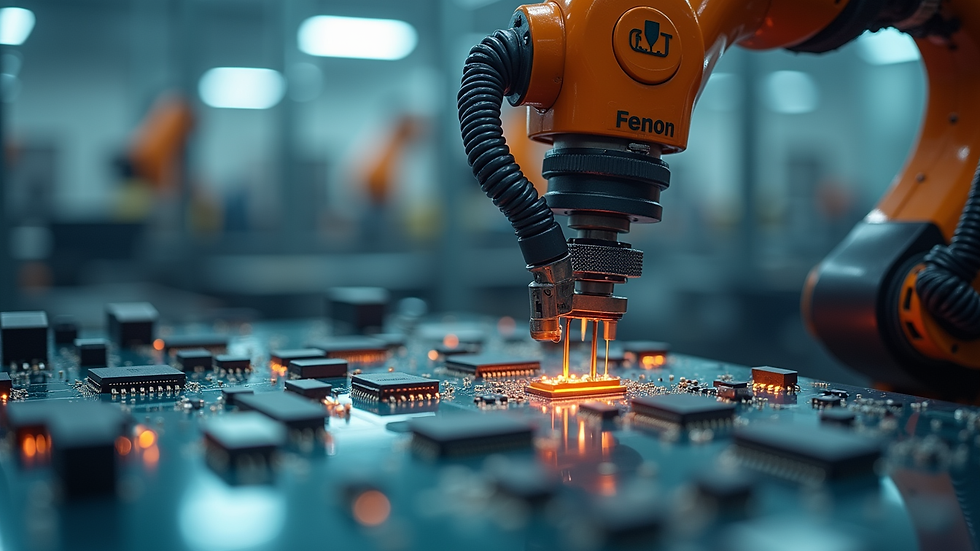
Key Electronics Automation Benefits in Product Development
When developing new electronics products, automation can be a game-changer. It accelerates the entire lifecycle from design to testing and manufacturing. Here are some specific benefits:
Rapid Prototyping
Automated design tools and simulation software allow engineers to test multiple iterations quickly. This reduces the time from concept to prototype dramatically.
Improved Testing and Quality Control
Automated testing rigs can run thousands of tests on components and finished products, catching defects early and ensuring reliability.
Streamlined Supply Chain Management
Automation helps track inventory, manage orders, and coordinate with suppliers seamlessly, reducing delays and stockouts.
Enhanced Collaboration
Cloud-based automated platforms enable teams across different locations to work together in real-time, sharing updates and feedback instantly.
By integrating these automated solutions, companies can reduce time-to-market and improve product quality, which is crucial in a competitive electronics landscape.
How Automation Drives Innovation in Semiconductor Firms
Semiconductor firms face unique challenges due to the complexity and precision required in chip manufacturing. Automation is essential to meet these demands and push the boundaries of what’s possible.
Precision Manufacturing: Automated lithography and etching machines operate with nanometer accuracy, enabling the production of smaller, more powerful chips.
Yield Optimization: Automated inspection systems detect defects early, allowing for quick adjustments and minimizing waste.
Process Integration: Automation connects different stages of production, from wafer fabrication to packaging, ensuring smooth workflows.
The integration of AI and machine learning into automation systems is also revolutionizing semiconductor manufacturing. These technologies analyze vast amounts of data to predict equipment failures, optimize process parameters, and accelerate R&D.
If you want to explore cutting-edge automation solutions, companies like xelec dubai are leading the charge by combining AI with electronics automation to make product development faster and more efficient.

Practical Steps to Implement Electronics Automation
Getting started with electronics automation might seem daunting, but breaking it down into manageable steps makes it achievable:
Assess Your Current Processes
Identify repetitive, time-consuming tasks that could benefit from automation. Look for bottlenecks and quality issues.
Choose the Right Tools
Select automation software and hardware that fit your specific needs. This could include CAD automation, robotic assembly, or automated testing equipment.
Train Your Team
Ensure your engineers and technicians understand how to use new automated systems effectively. Training is key to maximizing ROI.
Start Small and Scale
Pilot automation on a small project to measure impact and iron out issues before full-scale deployment.
Monitor and Optimize
Use data collected by automated systems to continuously improve processes and product quality.
By following these steps, electronics companies can unlock the full potential of automation without disrupting existing workflows.
The Future of Electronics Automation Benefits
Looking ahead, the role of automation in electronics will only grow. Emerging technologies like AI, IoT, and advanced robotics will deepen automation’s impact. Here’s what to expect:
Smarter Automation: AI-driven systems will not just execute tasks but also make decisions and optimize processes autonomously.
Greater Customization: Automation will enable mass customization, allowing companies to produce personalized electronics at scale.
Sustainability Gains: Automated systems will help reduce waste and energy consumption, supporting greener manufacturing practices.
Faster Innovation Cycles: With automation handling routine tasks, engineers can focus on breakthrough innovations.
Embracing these trends will be essential for companies aiming to stay competitive and lead in the electronics and semiconductor industries.
Unlocking Efficiency and Innovation with Automation
Electronics automation is a powerful lever for transforming product development and manufacturing. It delivers tangible benefits like speed, accuracy, and scalability while opening doors to new innovations. By adopting automation thoughtfully, companies can accelerate their growth and build the next generation of electronic products.
If you’re ready to explore how automation can revolutionize your processes, consider partnering with experts who understand the unique challenges of electronics and semiconductor industries. The future is automated, and the potential is enormous.
Start unlocking it today. Build with Xelec.


Comments